
1-week residency at Turchin Center for the (Visual) Arts, Appalachia State Univ., Boone, North Carolina
Turchin Project
a sobering glimpse of the museum experience
In April 2006 Steve Piccolo and Gak Sato spent a week in Boone, North Carolina, doing the nine-to-five thing at a fantastic contemporary art center, the Turchin. The idea of the project was to introduce sounds in the museum, using a number of different simultaneous strategies.
write-up at Turchin website
The name of the Center already summed up part of the problem we wanted to study: a contemporary art center that defines itself as a center “for the visual arts”.
What about this separation of sight and hearing? Does it resemble the age-old separation between reason and emotion, mind and body — the curses of occidental civilization? That’s part of what we wanted to find out.
What about this separation of sight and hearing? Does it resemble the age-old separation between reason and emotion, mind and body — the curses of occidental civilization? That’s part of what we wanted to find out.
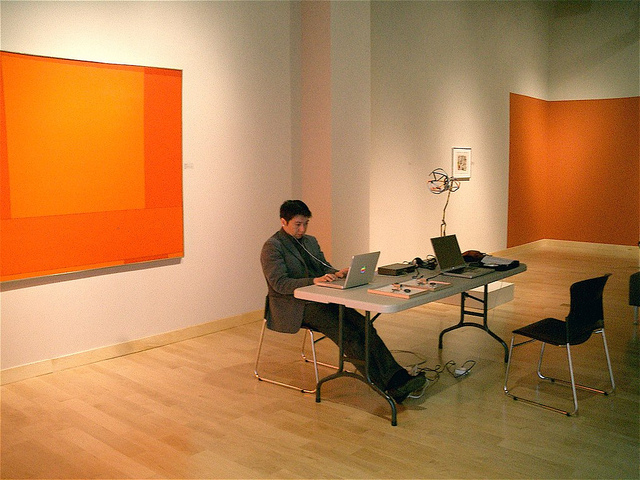
Gak Sato sitting at our table in the middle of a big room in the museum. Director Hank Foreman and the staff have done an amazing job of preparing the setting and getting people involved. From downstairs we can hear the clanging of sculpture-instruments made by local artists and students. The room is filled with a nicely unpredictable selection of artworks that might trigger aural suggestions in the viewer. We spent all day every day in the museum, recording visitor comments, installing soundtracks that changed with visitor input from day to day.
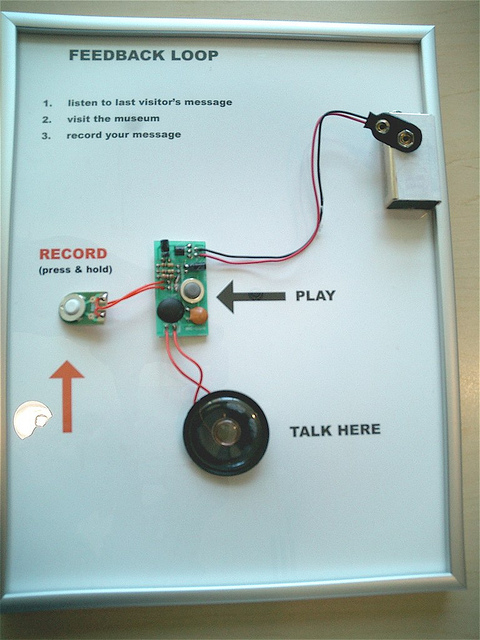
Visitors could use this device to hear a 20-second message left by the last visitor and record another message for the next one. The device needs to be simplified, many people didn’t get it without active explanation, believe it or not.
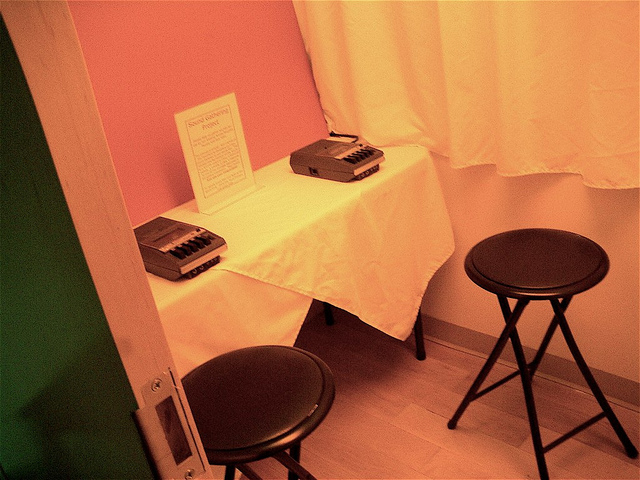
The Secret Room was one of the most successful sound collection strategies. People tend to be shy about recording their voices, but if they can do it in private they suddenly become very noisy indeed. In the public space of the museum comments tended to be succinct and serious. In the Secret Room, on the other hand, sound became an emotional outpouring of frustration, joy, childish inanity, aggression, madness and, well yes, even creativity.
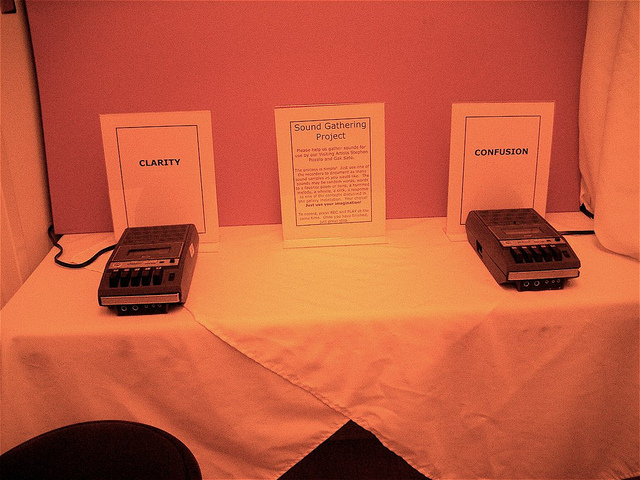
Another pic showing the choice offered for self-recording in the Secret Room. The use of very primitive recording technology seemed to really work… no one had problems operating the equipment. The tradeoff: bad sound quality. This could be resolved with added budget… but the idea of the very old user interface, perhaps connected to more sophisticated hidden recording devices, is worth pursuing.
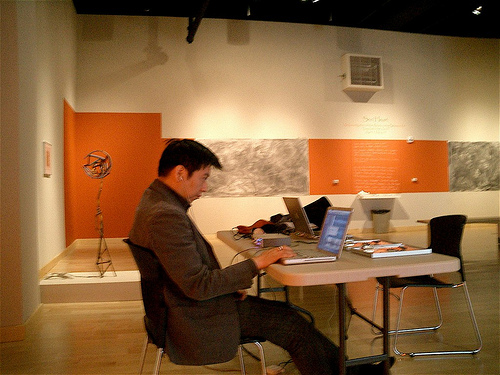
Gak still hard at work in the See Hear room. The sounds collected at the opening, in the Secret Room, during visits of school groups (led by Gayle Weitz and definitely the best subjects for our experiments), in the Feedback Loop device and in forays to spots suggested by visitors around the campus were all put on the museum website on a daily basis. All the collected sound materials were then used for sound installations in the painting galleries and for a final live performance that included the participation of some local talents we met during our stay (special guests Irmaly Bracken, Chris Bodall, Joel Lancaster).
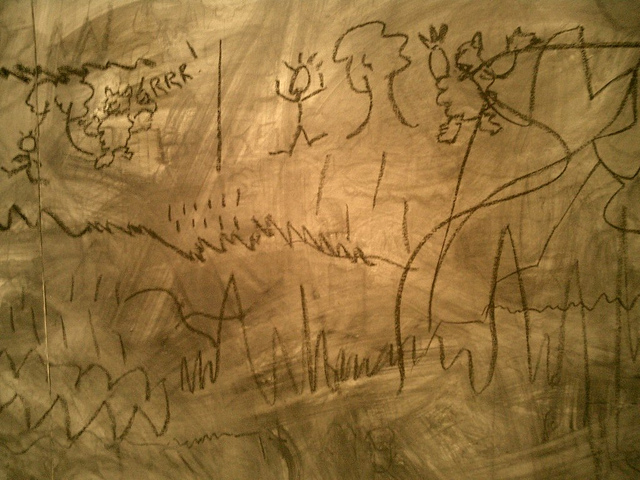
Big pads of paper were placed on the wall so visitors could make charcoal drawings or doodles as reactions to the sounds they were hearing. The approach tended to be quite uniform, a kind of Cartesian or waveform representation.
A selection of sound files from the project is available here: